Author: Shelly Baker

  • Ada Lovelace day: A celebration of women in Tech

    Ada Lovelace day: A celebration of women in Tech

    Tuesday 11th October, also known as Ada Lovelace day, is an international day of celebration for the achievements of women in science, engineering and maths. The day aims to increase the profile of women in STEM, create new role models for women and encourage more girls into STEM.

    But who is Ada Lovelace and why is she so significant? Credited as the founder of scientific computing in an era when the participation of noblewomen in intellectual pursuits was not widely encouraged. She collaborated with Charles Babbage, identifying his calculating machine for its potential to manipulate symbols rather than just numbers, foreshadowing modern computing a century in advance.

    Here’s our top 5 pioneering Women in Tech who have made an impact in the technology world:

    1. Sheryl Sandberg
    The Chief Operating Office of Facebook, a company made up of only 33% women and 67% men (with only 17% of women in technical roles) is arguably one of the biggest and most well known tech companies in the world. Sandberg is powerful not only as a top executive for the world’s fifth most valuable brand, but also as a voice of female empowerment in the workplace.

    2. Joan Clarke
    Largely forgotten and overshadowed in history, Clarke worked alongside Alan Turning as a fellow cryptanalyst and codebreaker in Hut8 during WWII at Bletchely Park, and received an MBE in January 1946 for her contributions during the war. Clarke succeeded as a female cryptanalysis at a time when intelligence wasn’t really appreciated in women.

    3. Shafi Goldwasser
    A two time Nobel Prize winner in theoretical computer science, Goldwasser helped pave the way for other women in the technology industry. Her biggest and most noted achievement to date is her work on interactive and zero proofs which serve to allow secure transmission of information over the internet.

    4. Sister Mary Kenneth Keller
    From Cleveland, Ohio, Keller was the first woman in the United States to receive a PhD in Computer Science in 1965. Keller founded the Computer Science Department at Clarke College in Iowa, establishing a master’s degree program for computer applications in education. Her vision extended beyond education and reached toward artificial intelligence, intrigued by the mechanical stimulation of the cognitive process.

    5. Radia Perlman
    Sometimes dubbed as the “Mother of the Internet”, Perlman is most famous for her invention of the Spanning-tree protocol (STP) which is fundamental to the operation of network bridges. Her work transformed the Ethernet protocol from using a few nodes over a limited distance, into something able to create large networks.

  • Come along to our Storage event

    Come along to our Storage event

    On Thursday 6th October IF Recruitment will be hosting another storage-focused event, hosted by our key storage consultants, Chelsea and Penny. We firmly believe networking to be one of the most valuable tools in an IT professional’s arsenal and are keen to continue to provide platforms for our contractors to continue to grow their contacts.

    The event will feature some top tips from IF Recruitment and plenty of opportunity for those operating in the IT storage environment to network with peers and discuss future plans and aspirations. We find these events hugely valuable in continuing to further develop existing relationships as well form new.

    We have chosen a very interesting venue for this fun and informative event – the historic Lamb Tavern located in Leadenhall Market in the heart of the City of London.

    If you are interested in the storage/cloud transformation area and would like to attend, please contact penny@ifrecruit.com for further details. We encourage you to bring along friends or colleagues, who you feel would be interested too. The more the merrier!

    We’ll soon be organising events such as this for all of the areas of IT we work within, so stay tuned for further details.

    Event details:

    Storage-focused Event
    Lamb Tavern
    Thursday 6th October
    5.30pm

  • Ringing the changes – a view from the long term and from the new

    Ringing the changes – a view from the long term and from the new


    In our fast paced, ever evolving industry, change is inevitable. Our business is no exception and, since we were established back in 1987, the tech we work with and the way IT recruitment works has changed considerably. Two of our recruitment consultants talk about their time at IF Recruitment and what drives business for them.

    The long view

    Working with the company since 1998, Melanie Bosley is one of the longest serving members of our team and she certainly knows her stuff.

    She joined as a researcher and resourcer after completing her BA (Hons) in Business Studies, followed by a year within the CMU team at BT. She’s seen our business evolve and expand ever since.

    “I’m looking forward to this next phase in the IF Recruitment journey. When I started working here, we were predominantly placing candidates for roles working with Unisys. Tech moves on rapidly, though, and over the years we’ve made some big changes to reflect that. The tech areas we place candidates into changes regularly and, at IF Recruitment, we always aim to be one step ahead to ensure our candidates and our clients get the very best service.

    “One of the first of those changes in tech happened internally, and just after I joined, we digitised our database. This became electronic in 1998, opening up great efficiencies and possibilities for us. That database is at the core of everything we do and it has grown every day since.”

    As the company has evolved, so has Melanie’s role, and she is now an IT Recruitment Consultant working in both the contract and permanent markets. Having built up a wide and well managed network, Melanie’s expertise lies in understanding each client’s business needs, their culture and their values, and sourcing hard to find candidates to slot into the roles for recruitment.

    About Melanie
    22
    Juggling her career with being the mother of two children – Abi and Zack – no two days are ever the same for Mel. Mirroring this, her success in placing candidates is largely down to her positive ethos and openness to change. Her ability to forge relationships with clients, taking the time to understand how they work and knowing the right person for the job is critical. To this end, Mel enjoys the personal side of her career, meeting and remembering people and finding that perfect fit that will benefit her clients and candidates.

    Recognising the need for constant evolution in the tech industry, Mel also takes an active approach to her personal career development. She can regularly be found out and about at different events and meet-up groups. She also takes time out to stay ahead of the game in her understanding of new tech, making sure she has up to the moment knowledge for every new enquiry.

    To find out more about working with Melanie, please contact her at melanie@ifrecruit.com

    In with the new

    Luke Farrow is new to the team, having worked at IF Recruitment since 6 June 2016. He’s no stranger to IT recruitment, though, and has worked in the industry for over two years. Starting his career recruiting for Fintech in the City, Luke has a great network and an easy manner with both clients and candidates.

    “I’ve joined IF Recruitment at a really exciting time and I’m looking forward to being a part of the next phase in the company’s development. Meeting the team after I was approached about my role, I immediately felt at ease – everyone works together to a common goal and there’s a great culture of sharing. That’s set to get even better with our new company direction.”

    One of our growing team of Recruitment Consultants, Luke works proactively to build his network of clients. He gets a great buzz when successfully matching candidates with clients’ role requirements and he is passionate about expanding his knowledge of new technologies.

    About Luke
    14
    Before moving into the recruitment arena, Luke took some time out to travel and to work in another arena he is passionate about. He trained as a soccer coach in America, working with children aged between between 5 and 15 and teaching them the basics of ‘the great game’.

    Moving back to the UK to start his career, Luke found that the skills he used on the soccer pitch are just as relevant in recruitment.

    “Working with people – whatever their age – requires good communication skills and the ability to empathise with a situation, to seek out each individual’s true strengths and to match those with a team need. Understanding and taking control of a group is just as important, and it’s these skills that have stood me in good stead in my career to date.”

    To find out more about working with Luke, please contact him at lukef@ifrecruit.com

  • On board with IF Recruitment

    On board with IF Recruitment

    Along with our new name, look and feel, the IF Recruitment boardroom has also seen some changes.

    Meet Joseph and Kelly Hathiramani
    21
    In October 2015, Joseph and Kelly Hathiramani took to the helm. Joseph and Kelly are no strangers to the recruitment world – they already head up a leading independent recruitment consultancy supplying the construction, technical, military infrastructure (MoD) and building services sectors, both nationally and internationally.

    They have come on board with plans to expand business here at IF Recruitment and they have made great progress so far. Our turnover has already increased and our business has expanded, with many new faces joining the fold.

    19Joseph, our Managing Director, is an experienced recruitment consultant with over 17 years in the sector – he brings a lot of knowledge to the company.
    Kelly is our Finance Director. Also with many years in the sector, she knows her way around just about anything to do with finance and contracts.

    If you would like to speak to Joseph or Kelly, please email them on Joseph@ifrecruit.com or Kelly@ifrecruit.com or call on 0203 362 4159.

    Introducing the Chairman – Tony Seager
    20
    Our Chairman, Tony Seager, is an exceptional trainer and coach in the recruitment field. He brings a wealth of knowledge and experience to the company and has actually aided the team for many years.

    Tony started his recruitment career in the late 1980s and has enjoyed much success as a consultant ever since. He is well regarded within the recruitment arena, and we feel very privileged to have him on the IF IT board.

    If you would like to speak with Tony, please email him at Tony@ifrecruit.com

    Connecting with our Sales Director, Jim Marshall
    13
    Jim remains as our Sales Director. With over 12 years’ experience of technical recruitment, Jim has a wealth of knowledge and is well respected in the industry.

    Jim predominantly works within the financial services (insurance, and retail banking) arena and he has well-established, strong relationships with both clients and candidates.

    If you would like to chat with Jim or if you have any questions, please call him on 0203 362 4159 or email Jim@ifrecruit.com


  • “Brand” New Direction

    “Brand” New Direction

    With a modern and vibrant new brand direction, IF Recruitment is shaking up the marketplace to deliver its proven industry specific recruitment service and a fresh and exciting competitive edge.

    Spend just two minutes in the company of Kelly, Joseph and Tony – the new board at IF Recruitment – and you’ll be as enthused for the new brand as they are. Their passion for the business and for the future of the recruitment industry is clear.

    The trio joined IF Recruitment just 12 months ago, bringing with them a vision that has captured the imaginations of the whole team. Their plan to develop and grow the business includes everyone within it. The existing IF team members are all still on hand, including Jim Marshall as Head of Client Services, while new faces have also been carefully chosen for their specialist knowledge and expertise – all allowing the company to expand into new and exciting areas of the ever changing technology marketplace as well.

    The new board’s belief in the strength of the organisation and its people is also unmistakable when looking at the direction they have taken for the new name and the brand behind it.

    “Our new name, IF, takes the heritage of the business, building upon its positive image and opening it up to future possibility. We’re really asking the questions ‘What if…’ and ‘If you…’ to deliver boundless possibilities for our clients and our candidates, as well as for our own company.” said Managing Director, Joseph Hathiramani. “With clients that include many of the top brands in the banking and finance sector, focusing on the service we deliver – both to them and to our candidates – will cement our position as leaders in the IT recruitment sector.”

    With this in mind, the IF Recruitment teams are revolutionising the way they work, restructuring to focus on their specialist areas, while the company has moved to larger, open plan offices to allow a joined up, solutions based approach as well.

    So whether you need a specialist candidate in cyber and information security, Fintech or mobile development, or if you have a project spanning many different specialisms, your IF Recruitment experts are on hand with the candidates and the technical know-how to help.

    To find out more about the new look IF Recruitment and how the business is changing to support your own, please contact info@ifrecruit.com or call 0203 362 4159.

  • Finding careers in Fintech

    Finding careers in Fintech

    Financial Technology, or Fintech as it’s now more commonly known, is a rapidly growing market. It’s also one of the more exciting – and possibly one of the more intimidating – areas in the banking industry. This can include services such as: money transfer, equity funding, P2P lending, mobile payments and trading platforms, to name a few.

    It’s estimated that people linked with Fintech now make up around 40 per cent of London’s workforce. And, including traditional Fintechs, such as First Date and Paysafe, as well as emerging Fintechs, such as Transferwise and Zopa, the industry has an annual revenue of around £20bn in the UK.

    Fintech – a brief history

    Fintech isn’t a new industry – in fact it has been around for many years. Traditionally consisting of large, yet basic, bespoke database solutions, the bottom fell out of the market in the financial crisis of 2008, while smart phones and tablets were just making it into mainstream at the same time.

    These changes made way for today’s Fintech companies – delivering innovative solutions that allow the financial sector to stay ahead of the technology curve, with innovation at their core.

    What IF…working in Fintech

    While many Fintech companies are start-ups, the industry is certainly not restricted to small business and many large organisations are investing heavily in their own Fintech teams.

    Recognising the need to recruit in the Fintech arena and understanding the very niche position Fintech has, at IF Recruitment we have our own resident Fintech expert.

    Luke Farrow joined the IF Recruitment team in June 2016 with several years’ experience working in London – the hub of the UK’s financial technology sector.

    Luke comments: “The IF Recruitment recruitment approach works well in the Fintech industry, building relationships and a unique understanding of our clients’ businesses and the niche they have carved for themselves. Using this knowledge, we are able to match candidates to fit perfectly within a team, as well as in the industry.”

    To find out more about Fintechs and our approach to recruiting in this exciting industry, please contact Lukef@ifrecruit.com


  • What Brexit could mean for the Technology Sector

    What Brexit could mean for the Technology Sector

    30 Jun 2016 A roundup of the key issues the UK Tech Sector will face in the wake of the Brexit vote

    In a tantalisingly close result, the British public voted to leave the European Union in an advisory referendum on 23rd June much to the astonishment of the world. The implications of the vote have raised numerous constitutional questions and left many anxiously wondering what effects it could pose for the UK and global technology sector as a whole. The lasting consequences won’t be known for many years but the current state of affairs is demonstrating some immediate ramifications. Within hours of the result, shares in technology companies have plummeted alongside the falling value of the pound and the FTSE 100. BT saw a 9.73% drop in shares, TalkTalk saw more than a 12% drop and Capita, an international outsourcing firm, has seen an 11.65% drop.

    A number of surveys of technology businesses reported an overwhelming majority in favour of remaining in the EU – with access to skilled personnel across 27 countries, the ability to strike better trading deals and extensive funding benefits at the forefront of their reasoning. Some of the most notable tech giants in the UK including Microsoft, BT, IBM, Virgin Media and a further 30 tech leaders penned an open letter urging voters to remain in the European Union. They described a “decision to exit the EU would leave tech firms and their customers facing significant and prolonged uncertainty, and leave the UK side-lined on key decisions that will shape a digital market of 500 million consumers.”

    Immigration

    Within the tech sector, London has been widely renowned as the digital capital of Europe and one of the most diverse technology ecosystems in the world – and its future as such is largely hanging in the balance. 1.56 million people are currently estimated to being employed in digital companies in the UK, with 328,000 of those working in London alone. Tech City forecast digital employment to grow by 5.4% by 2020. A percentage growth expected to be higher than that of all other occupations combined. However, Britain’s removal rom the European Union can greatly impact these growth expectations.

    One of the greatest concerns posed in the face of Brexit is what it means for companies and their abilities to hire talent and tap into investment opportunities. Once outside the EU, the UK will no longer benefit from the free flow of skilled workers coming out of the European Union. Large Tech Giants like Facebook, Apple and Amazon have relied on our immigration policies, building large offices in the UK as a means to take advantage of and recruit from the EU. Roughly 1 in 5 London workers are an EU national, according to Tech Advocates. With access to 500 million skilled personnel (a population greater than the US) revoked, the UK could be faced with a skills shortage; a venture which can cause significant disruption to the tech sector, creating the possibility of a downturn, and the delaying or scaling back of projects that could be vital to the advancement of tech.

    Many see the UK as a gateway to Europe, and a move out can force companies and workers to cast their eyes elsewhere to pre-empt issues of immigration or restricted trade. All eyes will now be on the UK government to see what kinds of rules and regulations get introduced that can grant EU citizens visas to work within the UK.

    Digital Single Market

    Europe has sought to craft rules that protect intellectual property and consumer data, eliminate roaming charges and end country-by-country restrictions on content provided by the likes of Netflix. This is referred to as the Digital Single Market (DSM) which is expected to save the EU €415 billion a year. Britain’s decision to leave the EU will ultimately threaten Europe’s effort to create a simplified market in which the UK was its biggest advocate. A Digital Single Movement has the potential to boost domestic tech companies that can rival Silicon Valley. The UK, a substantial market for American Internet companies, is likely to impose its own regulations after Germany’s Finance Minister, Wolfgang Schäuble, ruled out single market access in the face of Brexit.

    Investors want their companies to expand into new markets as a means to grow in size and revenue; however, they want this to be a process that can be manoeuvred as easy as possible. Exit from the EU has to potential to make this increasingly more difficult as investors will have to contend with two different sets of rules and regulations. Ultimately, fragmentation of the market has the potential to throttle digital scalability and profits, especially for Britain.

    Privacy Shield

    Brexit makes it increasingly likely that big heavyweights like, France and Germany, craft rules and regulations that make things increasingly difficult for US Tech firms who currently dominate 51% of Europe’s digital market. Europe has a deep-seated insecurity where the US Tech sector is concerned, forging ahead with regulations and lawsuits that address privacy concerns, digital and financial data. Companies like Apple, Google, and Facebook have all faced challenges over issues such as: taxation, antitrust and privacy matters at the hands of the EU.

    Being part of the European Union has meant that the UK has benefited from a number of data protection laws. One law in particular is extremely vital and yet to be instigated, the ‘Privacy Shield’, a means that enforces US companies to comply with privacy laws that protect European Union citizens. The new regulation could have the potential to prohibit European’s data being used in mass surveillance. Exiting the EU would mean that Britain would have to enforce their own law along the same lines of the ‘Privacy Shield’ to protect Brits and their data.

    “If the UK wants to trade with the single market on equal terms we would have to prove ‘adequacy’ – in other words, UK data protection standards would have to be equivalent to the EU’s General Data Protection Regulation framework starting in 2018,” said a spokeswoman for the Information Commissioner’s office in a statement.

    FinTech

    London’s crown as the global capital for FinTech is currently under threat. Currently one of the most promising growth sectors in the UK has become the most hard-hit with the prospect of losing access to European markets.

    In 2015, the British FinTech sector generated £6.6bn in revenues and attracted roughly £524m in investment. With over 61,000 people employed within the FinTech industry, it is currently larger than rival techhubs in New York, and the combined FinTech workforce of Singapore, Australia and Hong Kong.

    The inhibited access to the free movement of people and the single market can be largely detrimental to the outcomes of this industry. JPMorgan has stated that it could move an undisclosed number of its 16,000 staff based in the UK to the EU as they may have no choice but to re-organise their business model. Brexit could make it increasingly more expensive and complex to attract and retain talent from oversees as well as forcing start-up business to seek opportunities outside of the UK to build their businesses.

    Funding

    A major concern the industry now faces is its access to funding. Previously, universities and research labs received €8.8 billion of funding from the EU over a 6 year period leading up to 2013. In 2013 alone, the British Private sector received £1.4 billion in funding from the EU. As a result of leaving the EU, it is expected spend will drop significantly. John-David Lovelock, research vice-president at Gartner, has forecast the current growth for UK IT spending to be at 1.7%.  “Brexit will drop this figure between 2% and 5%,” which will put spending growth figures in the negative should Lovelock’s predictions be proven correct.

    Author Jessica Aston

  • December’s Anglia IT Community Event

    December’s Anglia IT Community Event

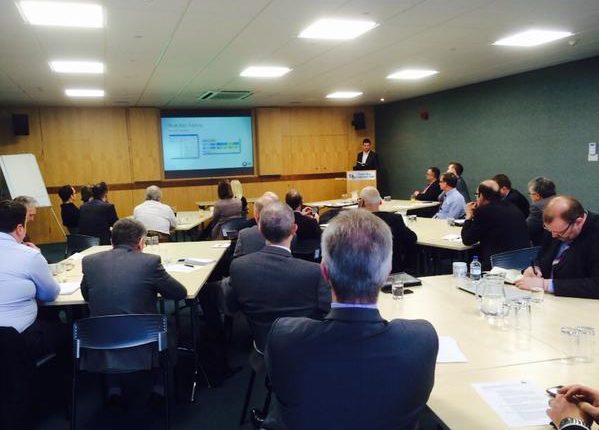
    11 Dec 2015 Technological evolution is integral to the very core of modern culture, its influence touching every aspect of living. Public spheres are altering; the importances of face-to-face relationships within the business sector are no longer vital operations.

    Technological evolution is integral to the very core of modern culture, its influence touching every aspect of living. Public spheres are altering; the importances of face-to-face relationships within the business sector are no longer vital operations. Communication in this age of technological dependence is instantaneous and simple. With the integration of mobile phones, e-mails, social networks, tablets and web-conferencing into the modern world, we are never out of reach from another human being whether they are 5 feet away or 5 thousand miles away.

    Within the IT sector, the rate of change has never been faster; the skills of today are skills that will no longer be necessary in the future. The ability to stay relevant is vital for the road to success. EACS, an award winning and trusted provider of IT solutions and managed services, brought these issues to the forefront in an event hosted by the Anglia IT Community on the 11th December at Bury St. Edmunds. A synopsis of the event noted that:

    “Automation and machine learning are key drivers for businesses to be operationally efficient. The net result is that the administration tasks of today, such as passwords resets, account creation etc. will become a thing of the past and evolve to a model of self service. IT teams will look very different in the future. The perception of IT being a few nerds that sit in a darkened room talking in a language that nobody understands will change. Educational changes will eventually see a rise in the uptake of girls actively pursuing IT and Science as a career. This diversity will filter through in the years to come that will add a different dynamic to the IT teams of the future.”

    But how does this affect those who have already established themselves in the IT sector?

    Companies or individuals that take advantage of new tools and technologies as they become available will have an advantage over those who are either late adopters or who enter the market at a later date. Therefore, it is integral to the advancement of companies and individuals that there is room for innovation and the creation of value strengths to aid the development of different skills when planning for the inevitable changes within IT. The success of graduate programs and apprentices will hinge on a company’s attitude and ability to plan for the future. Inevitably, Flexibility is key to an IT professionals bid for success.

    Author Jessica Aston